
In the win at Pau, FC Nantes showed they could break forward quickly after winning the ball, but also exposed positional weaknesses that left space behind the wing-backs.
The match summed up the current dilemma: how can the team become more ambitious going forward without weakening a defensive unit that has built its results on solidity? Before the international break, Grégory Poirier himself highlighted Nantes’ struggles to hold on to a lead and the individual errors that are costing them points.
FC Nantes’ defensive solidity and attacking play: finding the right balance
Start with what we saw on the pitch: when Nantes’ wing-backs push high without enough cover, the flanks become open highways for the opposition. The problem is not the system itself, but the coordination between attacking runs and defensive recovery.
In practical terms, maintaining defensive solidity in a more attacking setup means the central midfielders must cover for the full-backs’ forward runs. If the right wing-back pushes on, the midfielder on that side needs to shift across and close the space behind him. Without that discipline, switching from a 3-5-2 to a 4-3-3, or vice versa, does nothing to address the underlying problem.
An article outlining FC Nantes’ tactical keys also highlights this tension between attacking intent and defensive exposure, which remains the defining theme of Nantes’ season.
Another overlooked factor is the wing-backs’ output in the final third. Getting forward is all well and good. But crossing into empty space or losing the ball 30 metres from goal simply gives the opposition a chance to counter. A wing-back who fails to create a genuine threat is exposing his flank for nothing. Every forward run should be judged by what it produces in attack.
Quick transitions after winning the ball: FC Nantes’ real attacking weapon
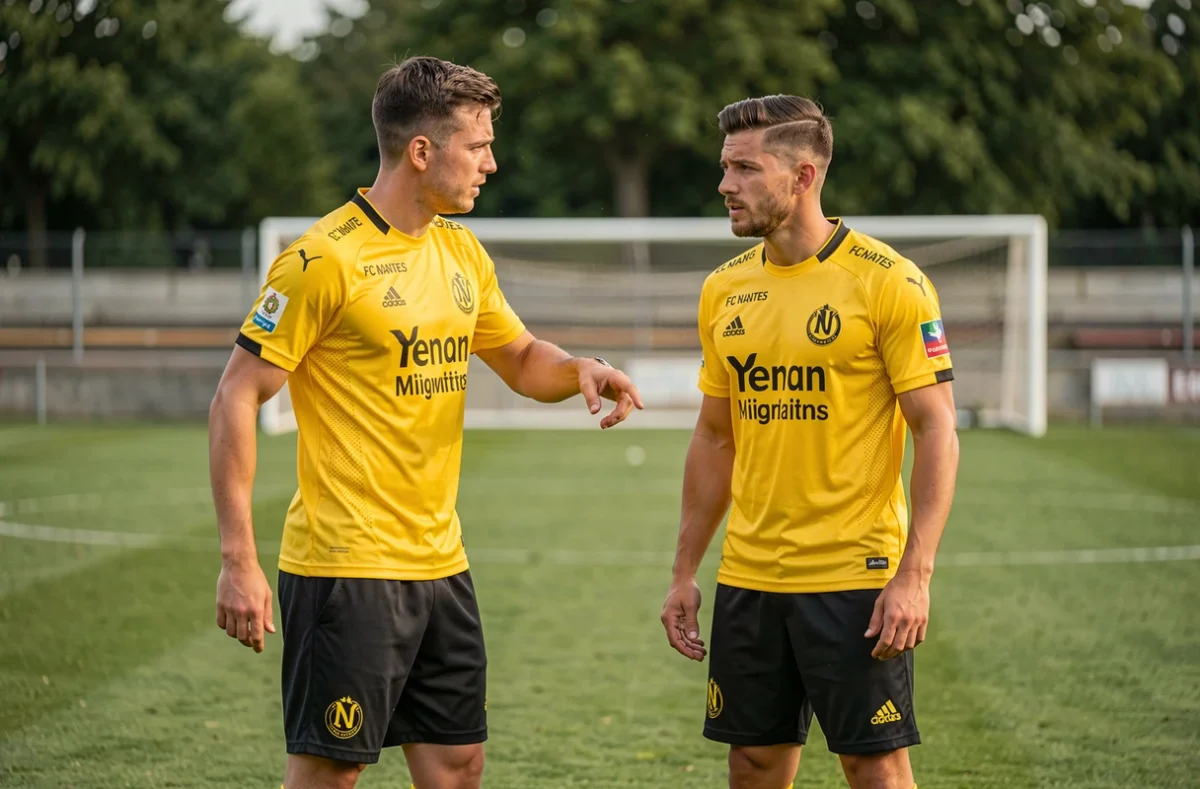
At Pau, Nantes’ best spells came from winning the ball high up the pitch and driving forward vertically in two or three passes. That was no coincidence. In a Ligue 2 where many teams build slowly, the ability to accelerate within five seconds of winning possession creates a structural advantage.
The problem arises when the forwards are not on the same wavelength. The match report from Pau noted that Nantes’ attacking positioning needs work: runs crossing instead of stretching the defence, and players making runs into the same areas. For the transition to work, roles need to be clearly defined.
- One player to pin the centre-back with a run in behind, even without receiving the ball, and create space behind him
- A midfielder to carry the ball forward quickly rather than slow things down while looking for a sideways pass
- A winger or wing-back to hold the width on the side opposite the ball and stretch the opposition’s shape
Without all three movements happening at once, the transition turns into sterile possession around the centre circle. Poirier has the right player profiles for this style of play; the key is to make those patterns repeat from one match to the next.
Managing the score in Ligue 2: an underestimated tactical challenge
Poirier made it clear before the trip to Pau: FC Nantes are dropping too many points after taking the lead. This is not just a question of mentality. It is a game-plan issue.
Many teams instinctively drop their defensive line by ten metres once they go ahead. But sitting deeper in Ligue 2 against opponents who send in crosses does not protect a lead. It simply increases the number of loose-ball situations in the box.
The best way to manage a lead is to keep the ball in the opposition’s half rather than defend deep. There is no need to chase a second goal at all costs. Simply keeping possession in the opposition’s final third prevents them from building any kind of attack.
Targeted pressing on the opposition playmaker
One practical option for the next few matches is to tailor the press to the player who orchestrates the opposition’s play. Pressing uniformly tires the team out and leaves gaps. Identifying the opponent’s main playmaker and cutting off his passing lanes with a targeted marking approach is far more effective over the course of a match.
In practice, this requires video analysis beforehand. Identify the player who sees the most of the ball during build-up, then assign a midfielder to disrupt him consistently. The rest of the team can then sit deeper without being put under pressure, because the opposition has lost its main source of creativity.
Changing FC Nantes’ tactical system: experiment without tearing everything up
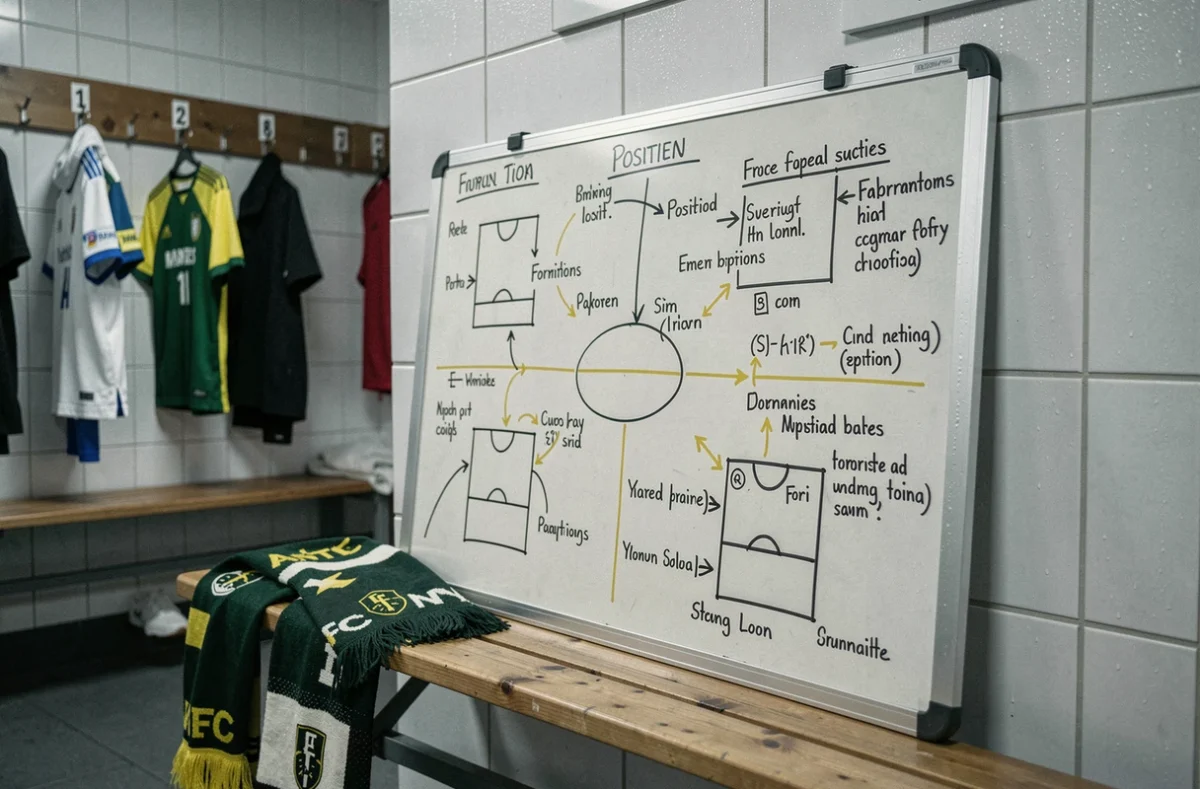
Poirier is clearly preparing some adjustments after the international break. The idea is not to overhaul everything, but to try a different approach without abandoning the basic system. Passing patterns, pressing zones and the triggers for the full-backs’ forward runs can all be changed without switching from a back three to a back four, or vice versa.
The match at Pau served as a testing ground, with a more attacking setup and an attacking player returning to the starting eleven. The transitions were encouraging, but defensive stability was less convincing. The scope for improvement lies between those two extremes.
- Work on covering patterns when a wing-back pushes forward, to avoid a repeat of the unbalanced situations seen early in the season
- Vary the attacking approach depending on the opposition: direct play against a low block, short combinations against a team that presses high
- Introduce changes gradually during matches rather than imposing them from the start, to limit disruption
The risk, with injuries mounting, is that the squad may not have enough depth to maintain two tactical systems in parallel. If one or two regular starters are unavailable, the alternative approach may lose its purpose without the right player profiles.
The coming Ligue 2 fixtures will show whether FC Nantes can turn these ideas into points. The defensive foundation is there, as is the attacking potential on the counter. What is missing is consistency in execution and a clear plan for the moments when the score swings in the Canaries’ favour.