The numbers speak louder than promises: despite the proliferation of family support initiatives, many programs remain fallow, paralyzed by cumbersome processes or a glaring lack of coordination. In contrast, informal networks operate in open terrain, sometimes effective, but without clear rules of the game. The result: confusion sets in, the distribution of services turns into inequality, and goodwill wanes.
Families are trying to find their own ways out. They cobble together solutions, rely on collaborative platforms, or make arrangements with neighbors on the same floor. But these initiatives remain the exception, rarely the norm. What is missing? Clear information, accessible tools, and a shared conviction that mutual aid should not be an obstacle course.
Further reading : How to Choose the Perfect Cruise for Your Vacation?
Why mutual aid among families changes daily life
At the heart of the family, mutual aid pulses as a given: parents, children, grandparents, each contributes their share of support, laughter, and helping hands. But solidarity does not stop at the walls of the house. It stretches, reaches out to neighbors, invites itself into neighborhoods, crosses the invisible borders that separate households. In France, these networks of family relationships redraw the social landscape, weaving a web of reciprocity where every gesture counts.
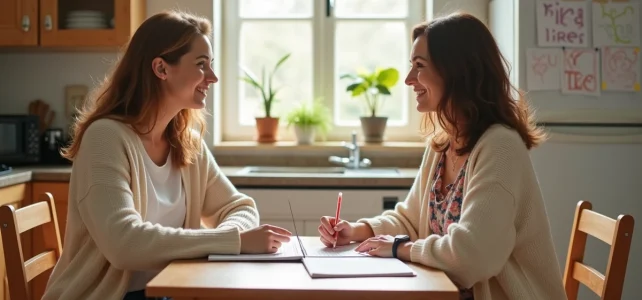
Cooperation is invented every day. Parents, friends, sometimes child care professionals combine their skills: taking children to school, cooking in turns, organizing joint activities. These exchanges do not only meet material needs: they forge a solid trust, capable of withstanding the unexpected and transforming routine.
See also : How to Highlight Your IT Skills for an Impactful Resume
Everything rests on transmission. Observing, listening, explaining, co-educating: this flow of knowledge and attention benefits everyone—children, parents, and adults who orbit around the household. By sharing gestures and experiences, we strengthen the sense of belonging to a group and the quality of bonds, generation after generation.
To find concrete ideas or to be inspired by what works elsewhere, discover Family 2 Family opens the door to testimonies and feedback from experiences created by and for families. It reveals how, when solidarity is lived daily, it sustainably changes reference points and priorities.
What obstacles do parents encounter in organizing service exchanges?
The mental load weighs heavily on parental shoulders. Between work, household logistics, and schedules to respect, it is difficult to allow for any improvisation. Participating in an exchange system requires planning, anticipating, sometimes without a safety net. However, there is often a lack of an environment that facilitates cooperation, both materially and relationally, for mutual aid to become a habit rather than an exception.
Trust is never imposed: it is learned, cultivated. Entrusting one’s children, asking for help, is not trivial. Many fear being a burden or not being able to reciprocate. Accepting to receive, recognizing one’s limits, also requires breaking free from a certain discomfort. The relationship to giving and gratitude remains tinged with unspoken rules in a society where reciprocity and spontaneity do not always go hand in hand.
Another difficulty: organizing these exchanges requires specific skills—communicating, organizing, clearly expressing needs. For those who did not grow up in supportive environments, the process can be intimidating: one can feel alone, without a manual.
Here are the obstacles that hinder taking action:
- Little time to dedicate to organization;
- Difficulties in establishing mutual trust;
- Balancing giving and receiving remains a challenge;
- Absence of a conducive framework for cooperation.
Knowing how to ask, accepting help, also relies on mutual recognition: a sine qua non condition for mutual aid to take root and develop.

Simple and concrete ideas for easily helping each other among families
Easing the daily life of parents is not an unattainable dream. Cooperation is built on simple gestures, local agreements, the willingness to unite forces so that everyone can breathe a little easier.
Sharing school runs, organizing emergency child care, exchanging helping hands or skills: these solutions prove effective. In many neighborhoods, support networks are being established through very accessible tools: shared lists, messaging groups, online boards. Sometimes, all it takes is a common document to trigger a collective dynamic.
Valuing the time spent together becomes a driving force. Lending a hand during a move, preparing a meal for a family going through a busy time, welcoming a neighbor’s children for an afternoon: these gestures create concrete and visible solidarity. Even board games, like Bandido or Hanabi, are powerful tools for learning to cooperate and strengthening team spirit across generations.
Digital tools, provided they are used wisely, bring families closer: messaging apps, groups on Signal or WhatsApp, all facilitate organization. But nothing replaces moments of true sharing: parent coffee meetings, workshops, community gardens are all anchoring points for building trust and multiplying exchanges.
Several avenues can help anchor mutual aid in everyday life:
- Organization of shared trips and activities
- Group purchases or pooling of certain services
- Reciprocal exchange of time or skills
- Creation of local discussion groups
Solidarity among families benefits from remaining simple and accessible: everyone, in their own way, can find their place in this network. As gestures accumulate, a new form of cohesion takes shape, at a human scale, far from abstract discourses. The bonds woven today already outline the contours of a less fragmented society, where the outstretched hand becomes a shared habit.