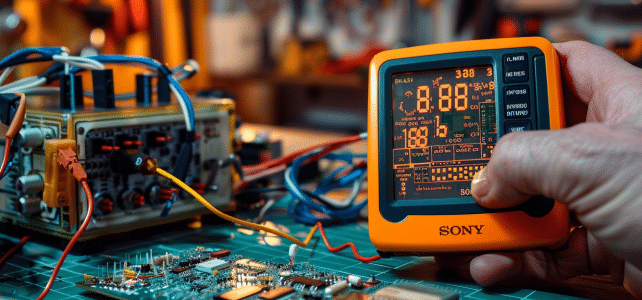
In the world of electronics, mastering the use of a multimeter is essential, especially for those starting out in this fascinating field. This versatile tool, capable of measuring voltage, current, and resistance, is an indispensable companion for diagnosing circuits and troubleshooting devices. For beginners, understanding the multimeter may seem complex, but it is a valuable skill that opens the door to a better understanding of electrical principles. Through learning the basic functions and practicing on small projects, beginners can quickly become proficient in using this essential instrument.
The Basics of the Multimeter: Operation and Types
The multimeter, a measuring tool with multiple faces, is the indispensable ally of both amateur and seasoned electronics enthusiasts. Indeed, this device, acting simultaneously as a voltmeter, ammeter, and ohmmeter, performs electrical measurements with precision that is often crucial. Electrical voltage, current intensity, and electrical resistance: three fundamental quantities whose exact knowledge is essential for the success of any technical intervention.
Read also : How to Create a Driveway on a Budget?
Two main families of multimeters compete for user preference: analog multimeters and digital multimeters. While the former appeal with their oscillating needle, translating a real-time measurement, the latter, with their digital display, ensure a direct and often easier reading of the measured values. In the digital age, the WebCSAT 58, for example, stands out for its robustness and precision, qualities sought after by professionals.
Let’s discuss the units of measurement. The volt expresses the measurement of electrical voltage, the ampere that of current intensity, and the ohm that of electrical resistance. Mastering these units is a prerequisite for anyone intending to use the multimeter effectively and accurately. Without this knowledge, even the most sophisticated device leaves its user powerless.
Recommended read : How to Choose a Blender Suitable for Nuts to Make Successful Homemade Nut Butters
The versatility of the multimeter is also evident in its ability to test the operation of electrical devices, beyond mere measurement. Testing the continuity of a circuit, checking the condition of electronic components, tracking failures or short circuits—these are just some of the operations that this Swiss Army knife of electronics allows. Take control of this technology, explore its multiple functions, and become, through experience and practice, informed users.

Practical Guide: Measuring Voltage, Current, and Resistance for Beginners
Before any manipulation, the safe use of the multimeter imposes strict rules. Ensure that you have selected the appropriate range for the quantity you are going to measure, in order to avoid any damage to the device or worse, any exposure to electrical risk. Knowing the type of current, whether alternating, direct, or pulsed, is fundamental in this preparatory step, as it determines the correct setting for your tool.
For measuring voltage, place the tip of the red lead on the positive measurement point and the black lead on the negative measurement point. The red lead typically connects to the terminal labeled ‘VΩmA’, while the black connects to the common terminal, often indicated by ‘COM’. Once the connections are made, the multimeter displays the voltage present in the electrical circuit.
Regarding measuring current, the operation becomes slightly more complicated. Interrupt the circuit where the current is to be measured and insert the multimeter. Be sure to select the appropriate range for the current you suspect, in order to avoid damaging the device. Connect the black lead to the common terminal and the red lead to the terminal designated for current measurement, often marked with an ‘A’ or ‘mA’, depending on the expected intensity.
The measurement of resistance requires that the component to be tested is isolated from any circuit. After ensuring that no current is flowing, place the leads as you would for a voltage measurement. The multimeter, set to ohmmeter mode, will then reveal the resistance of the component in ohms. Remember that the accuracy of these measurements intrinsically depends on the quality of contact between the measurement tips and the component being tested.