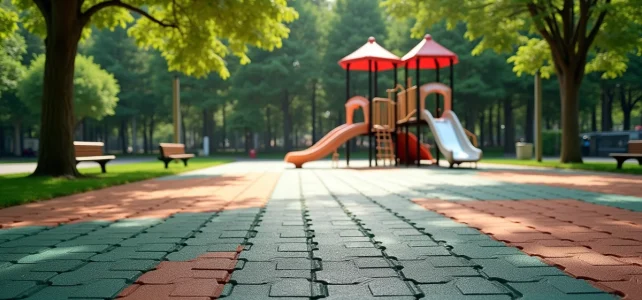
When comparing the flooring options available for a playground, the criterion that distinguishes the choices is neither price nor aesthetics, but the shock absorption capacity related to the fall height of the equipment. It is on this specific point that shock-absorbing tiles stand out from traditional alternatives like sand, wood chips, or gravel.
The European standard EN 1177 provides the measurement framework, and the differences between materials are significant.
Recommended read : How to Choose the Best Professional Training to Boost Your Career
Critical fall height and tile thickness: the technical data to know
The choice of a shock-absorbing surface relies on a central parameter: the critical fall height (HIC). This value, measured according to the EN 1177 standard, determines the maximum height from which a fall remains acceptable in terms of energy absorption by the ground.
For recycled rubber tiles, the thickness directly determines the allowable fall height. A thinner tile is suitable for low structures, while a slide or swing set requires a greater thickness.
See also : How to Choose the Perfect Cruise for Your Vacation?
| Type of surface | Fall height covered | EN 1177 compliance | Permeability |
|---|---|---|---|
| Sand (sufficient thickness) | Moderate, variable depending on settling | Under strict maintenance conditions | High |
| Wood chips | Moderate, degrades over time | Under renewal conditions | High |
| Rubber tile (standard thickness) | Suitable for low structures | Yes, certified | Low (except perforated version) |
| Rubber tile (reinforced thickness) | Suitable for high structures | Yes, certified | Low (except perforated version) |
| Cast EPDM surface | Suitable depending on formulation | Yes, certified | Low |
Sand and wood chips lose their shock-absorbing properties over the months: settling, dispersion by wind, animal contamination. The shock-absorbing tiles for playgrounds made of rubber maintain their mechanical characteristics for several years without heavy intervention.
Shock-absorbing tiles and heat islands: a parameter that catalogs overlook
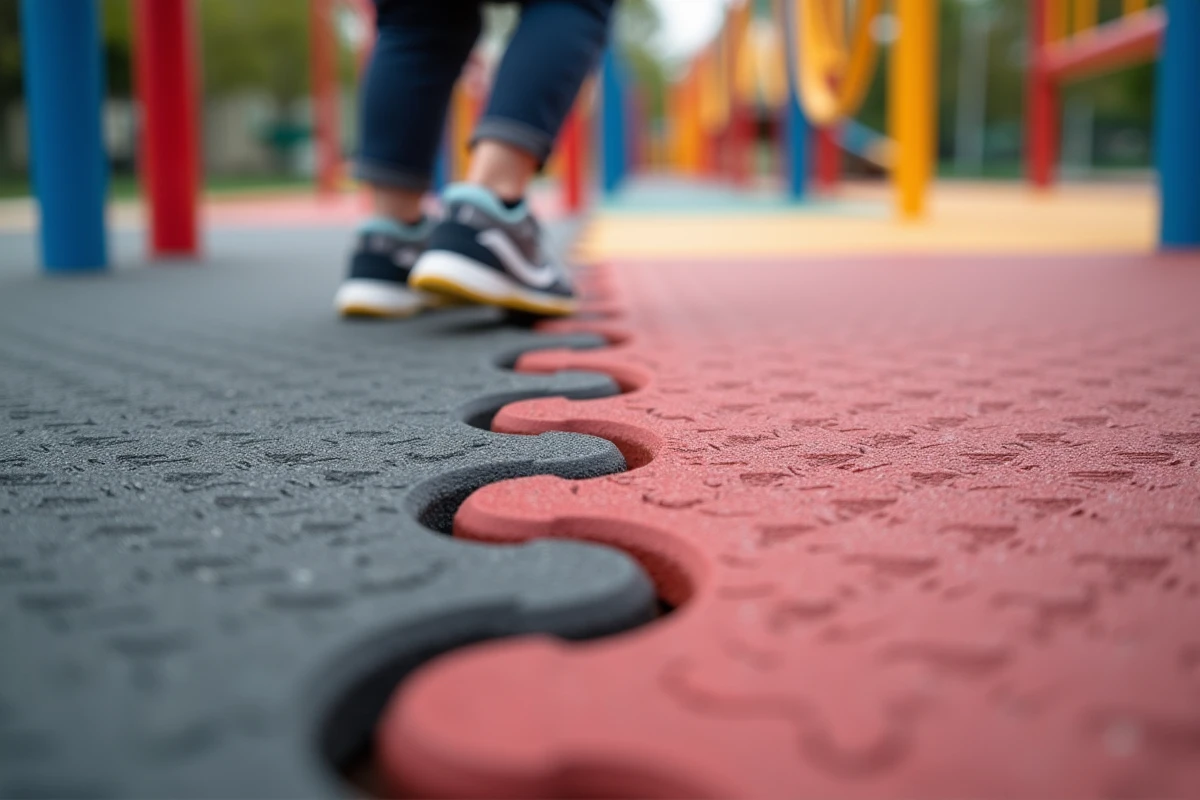
Feedback from pilot projects conducted by Cerema highlights an aspect rarely addressed by manufacturers. Dark shock-absorbing surfaces contribute to heat islands, particularly in schoolyards in southern France. A black or dark red EPDM surface exposed to sunlight can reach surface temperatures that make the area uncomfortable, even dangerous for children’s bare feet in summer.
The technical recommendations published between 2023 and 2024 point towards two solutions:
- Light-colored shock-absorbing tiles, which reflect more solar radiation and limit thermal accumulation on the surface
- Perforated tiles to be grassed over, which combine compliance with the EN 1177 standard and a cooling effect thanks to the evapotranspiration of the grass
- The gradual abandonment of black monolithic surfaces around play equipment in favor of lighter shades or mixed solutions
This thermal criterion does not appear in any standard product sheet. However, it weighs heavily in the actual comfort of use of a playground between May and September.
Perforated tiles and “oasis schoolyard” programs: the regulatory compliance that changes the game
Since 2022, several local authorities have conditioned their grants for the redevelopment of schoolyards on a significant share of permeable and depaved surfaces. The “Resilient Schoolyard” programs of the City of Paris and regional metropolises impose quantified goals for renaturation.
Perforated tiles to be grassed over meet this dual requirement: they are counted as permeable surface in several local PLU regulations or climate plans, while complying with the EN 1177 standard for children’s safety.
For a local authority that must arbitrate between normative safety and environmental objectives, this category of tiles represents a documented compromise. In contrast, a conventional cast EPDM surface, even if compliant with safety standards, may be rejected in a grant application focused on depaving.
Selection criteria for a project in a school environment
The technical guide published by ADEME in 2023 on the depaving of schoolyards provides an evaluation framework. The shock-absorbing surface must be analyzed according to three simultaneous axes: EN 1177 compliance, soil permeability, and thermal behavior.
A project that only considers safety standards risks placing impermeable black tiles on a paved yard, which ticks the regulatory box without improving climate comfort. Conversely, a project focused solely on renaturation might install simple grass, which is insufficient to absorb shocks under a swing set.
Maintenance and lifespan of rubber tiles in outdoor playgrounds
The durability of a shock-absorbing tile made of recycled rubber depends on three factors: UV exposure, foot traffic in the area, and drainage of the substrate. A tile placed on poorly drained soil degrades faster due to moisture retention on the underside.
Cleaning is limited to a water jet and occasional brushing. Unlike sand, which requires regular raking and frequent renewal to remain compliant, or wood chips that need to be replenished each season, rubber tiles do not require material resupply.
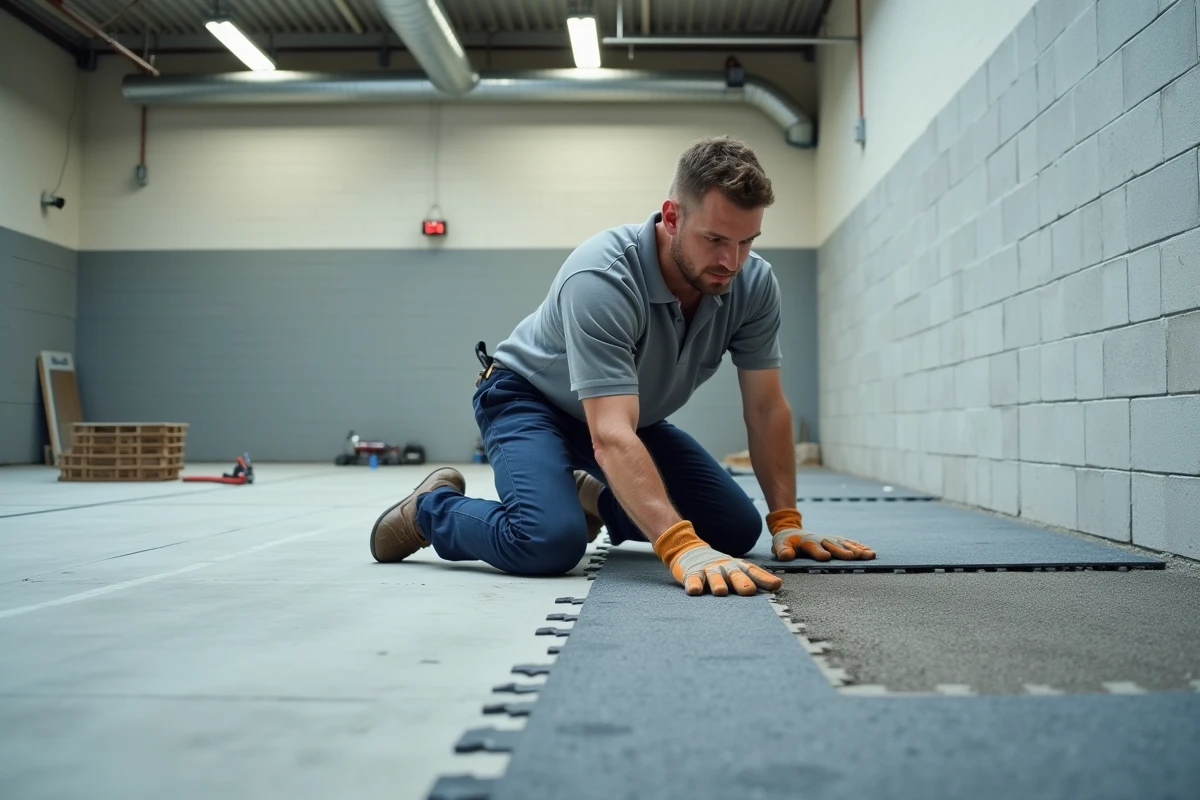
However, a damaged tile (tearing, deep crack) must be replaced individually. The interlocking or pedestal installation makes this individual replacement easier without having to redo the entire surface. This point represents an economic advantage in the long term compared to cast EPDM surfaces, where localized repairs remain visible and technically more complex.
Periodic checks not to be neglected
- Check for any detachment or lifting of the tiles after each winter, as freeze-thaw cycles can deform the joints
- Ensure that the perforated tiles are not obstructed by dirt or debris, which would negate their drainage function
- Ensure that the surface remains compliant with the requirements of the EN 1177 standard after several years of use, particularly under the landing zones of slides and swings
Initial compliance does not guarantee compliance over time. Regular checks, ideally annually, remain the only way to ensure that the shock-absorbing surface continues to fulfill its protective function. The choice of surface is only part of the equation: without monitoring, even the best tile loses its properties.