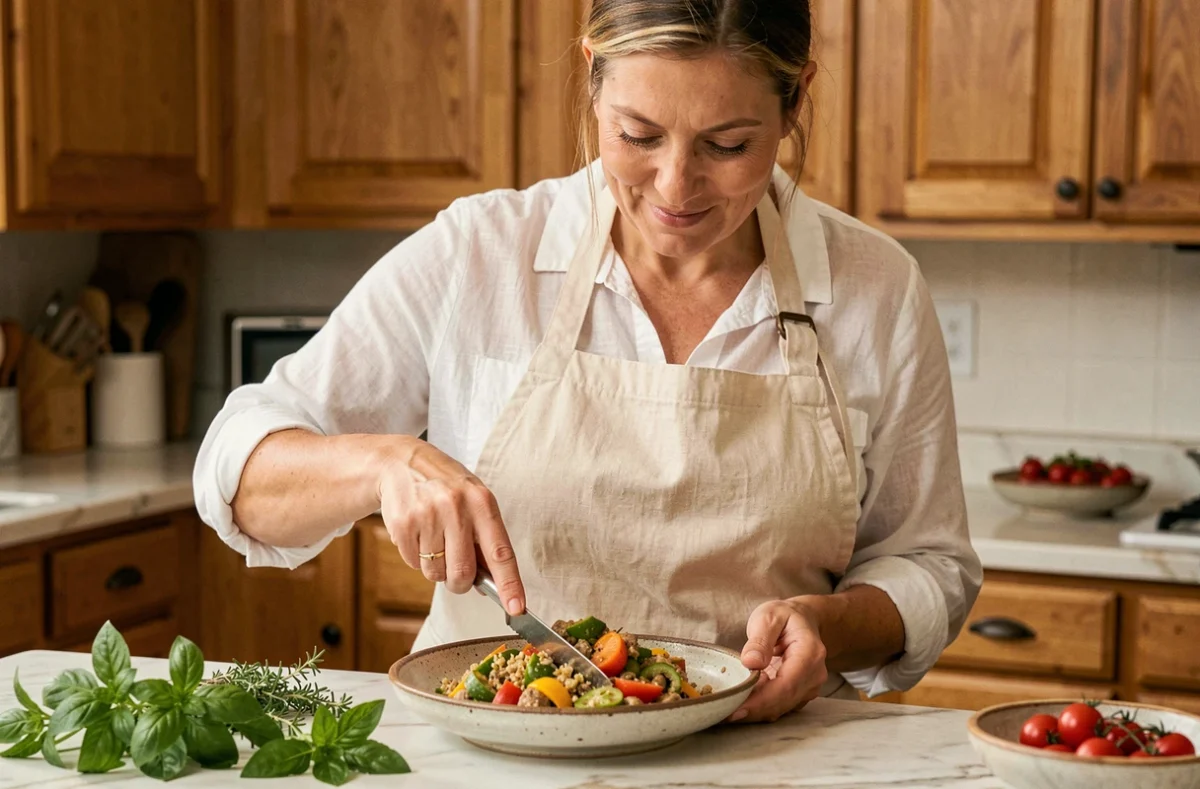
The difference between a decent homemade meal and a memorable dish rarely lies in the recipe itself. It comes down to managing the basics, mastering fermented condiments, and the logic of assembling from pre-prepared ingredients.
Homemade Fermentation: An Acidity That Vinegar Cannot Replicate
A lacto-fermented vegetable develops a complex acidity, driven by organic acids like lactic acid and acetic acid. This depth of flavor is absent in industrial condiments. We recommend treating fermentation as a fundamental kitchen base, just like a broth or a roux.
A jar of fermented cabbage or pickled carrots acts as a versatile flavor enhancer. Added at the end of cooking to roasted chicken juice, it elevates the sauce without overpowering the meat’s flavor. In a vinaigrette for a lentil salad, it replaces the pickle with a broader aromatic spectrum.
Sourdough follows the same logic. An active sourdough starter is not just for making bread: a spoonful in a pancake or blini batter adds a slight acidity and a lightness that baking powder cannot produce. Resources like chezagathe.com detail approaches to integrate these techniques into daily cooking.
Kombucha, reduced over low heat until it becomes a syrup, serves as a sweet-and-sour glaze on roasted vegetables (sweet potatoes, squash, beets). The reduction concentrates residual acids and sugars into a condiment that no store offers.
Modular Batch Cooking: Separate Bases Instead of Complete Dishes
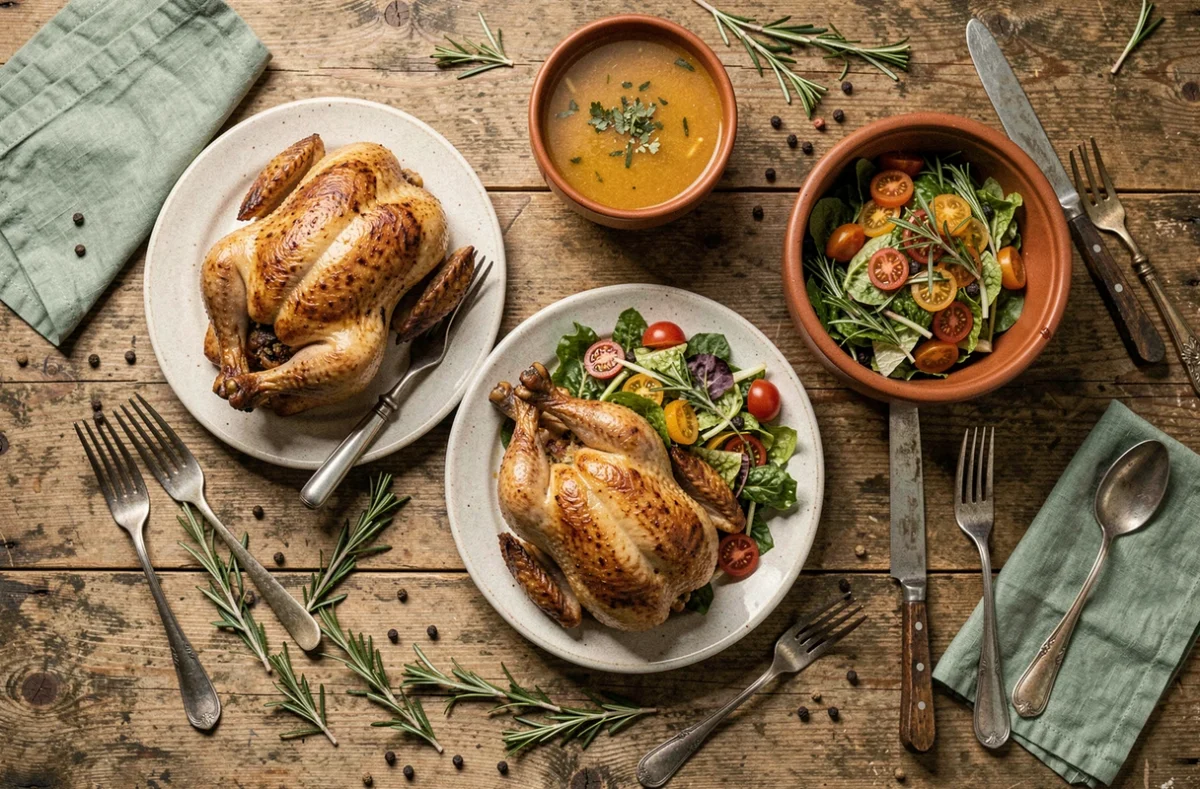
Preparing separate bases instead of complete dishes changes the game for the entire week. A batch of semi-complete rice, cooked chickpeas, a tray of roasted vegetables, and two sauces allow for varied meals over four to five days without cooking every evening.
The principle is based on modularity. On Monday, the rice accompanies grilled chicken with a tahini-lemon sauce. On Wednesday, this rice becomes a stir-fried rice with the remaining roasted vegetables and a drizzle of soy sauce. On Friday, the chickpeas serve as the base for a quick curry made with dry-roasted spices.
The Sauces That Hold the System Together
Without sauce, batch cooking turns monotonous. We find that two well-thought-out sauces cover the majority of meals for the week:
- A cold emulsified sauce (tahini-lemon, pesto, or chimichurri), adaptable to grains, grilled proteins, and raw vegetables.
- A hot reduced sauce (chicken stock mounted with butter, concentrated tomato sauce with spices, or deglazed cooking juices) that transforms leftover pasta into a complete dish.
- A fermented condiment (kimchi, pickles, diluted miso) that adds acidity and complexity without additional cooking.
Labeling containers with the preparation date remains a reflex too often neglected. Beyond three days in the refrigerator, most bases lose in taste quality and food safety. Freezing a portion on the day of preparation is better than finding it questionable by Thursday.
Creating a Homemade Meal from What’s in the Refrigerator
The most effective culinary planning does not start with a cookbook. It begins with an inventory: the short-dated vegetables, the leftover pasta, the piece of cheese that’s drying out, the bunch of herbs bought three days earlier.
Building the menu around existing products significantly reduces waste. A tired leek, split in half and roasted in the oven with olive oil and parmesan, becomes a dish in itself. Radish greens can be transformed into soup or green pesto in just a few minutes.
Binding Ingredients: When One Product Structures the Meal
Some ingredients act as connectors between disparate leftovers:
- A poached or fried egg unites any bowl of grains, vegetables, or legumes into a coherent meal.
- A handful of toasted nuts or seeds adds the crunch missing from a dish of soft vegetables.
- A splash of diluted white miso in a bit of hot water creates an express broth that binds leftover vegetables into soup.
- A drizzle of good olive oil as a finishing touch enhances a warm dish better than melted butter.
This approach requires giving up a pre-set menu. The meal is constructed at the moment of opening the refrigerator, not in front of a screen on Sunday evening.
Spices and Cooking: Two Underutilized Levers in Daily Cooking
The majority of amateur cooks underheat their pans and under-season their spices. Toasting whole spices dry before grinding them releases volatile aromatic compounds that commercial powders have long lost. Cumin, coriander, fenugreek: thirty seconds in a dry pan over medium heat is enough to transform their flavor profile.
On the cooking side, the Maillard reaction requires high temperature and a dry surface. A still-wet piece of chicken placed in a warm pan will boil instead of browning. Dry the protein, preheat the pan to high heat, then do not touch the piece for several minutes: this sequence produces the caramelized crust associated with restaurant cooking.
Dark chocolate, used in small quantities in chili, stew, or game sauce, adds a structuring bitterness without a perceptible sweet taste. It acts as an umami enhancer, following the same logic as soy sauce in East Asian cuisines.
Elevating a homemade meal does not depend on the complexity of the recipe or the budget of the ingredients. Fermentation, modular batch cooking, refrigerator management, and mastering cooking temperatures form an accessible technical foundation. The best dish of the week sometimes arises from a leftover that was not planned for cooking.