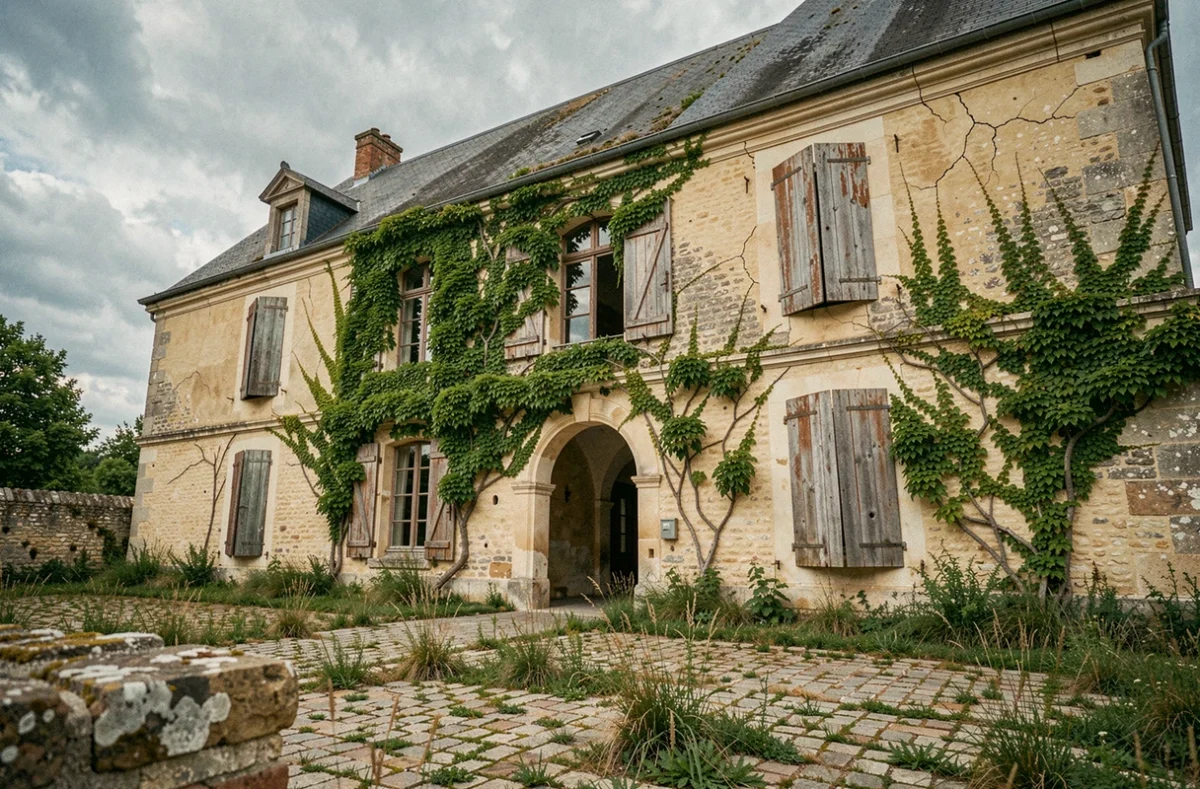
A castle sold for a symbolic price of 1 euro does not actually cost 1 euro. The acquisition price masks a financial and legal commitment that amounts to hundreds of thousands of euros in renovations, accompanied by heavy regulatory constraints. Understanding the real mechanics of these transactions prevents turning a heritage dream into a financial pitfall.
Agreement with the Ministry of Culture: the real legal framework
When a local authority or public organization sells a castle for a symbolic price, the transaction involves signing a agreement with the Ministry of Culture. This document outlines the buyer’s obligations: the nature of the work to be done, the timeline, and compliance with heritage requirements.
This agreement is not a mere statement of intent. It contractually binds the new owner for a defined period. In case of non-compliance, the administration can demand the return of the property or initiate legal proceedings.
Before signing, it is essential to precisely identify the protection status of the castle. A property classified as a historical monument requires specific authorizations from the regional prefect for any type of work, including interior renovations. A property listed under a different regime involves the intervention of the Architect of the Buildings of France through urban planning permits.
The confusion between these two regimes, common among unaccompanied buyers, generates costly delays during the renovation process. This distinction must be verified directly with the DRAC and included in the sales deed.
Identifying warning signs before committing to a castle for sale for a symbolic price of 1 euro remains the first precaution to take, well before any site visit.

Irregular work by the previous owner: a risk transferred to the buyer
A trap rarely anticipated involves interventions carried out by the previous owner without the required authorizations. Interior transformations, roof modifications, or structural additions may have been made without validation from the ABF or without proper permits.
The buyer assumes responsibility for these irregularities. The administration can require restoration at the new owner’s expense, even if the work dates back several decades. This transfer of risk is not always clearly stated during the transaction.
To protect oneself, it is necessary to demand a set of specific documents before signing:
- The decrees and building permits issued for each past intervention, as well as prior work declarations
- The opinions issued by the Architect of the Buildings of France, including any unresolved reservations or prescriptions
- The work acceptance reports, which attest to their compliance with the obtained permits
Having a specialized lawyer in heritage law review the regularity of these documents before signing the authentic deed is a modest investment compared to the cost of enforced compliance.
Maintenance obligation and official work: what heritage protection imposes
Acquiring a protected monument not only imposes restrictions on work. Protection also creates a legal obligation for maintenance that weighs on the owner permanently.
In the event of serious neglect endangering the building, the State has the power to enforce compliance. The owner may be ordered to carry out the necessary work for the property’s conservation. If this order goes unheeded, the administration can execute the work at the owner’s expense.
This mechanism turns the castle into a continuous burden. A buyer who has not budgeted for ongoing maintenance (roofing, framework, masonry, drainage) over several years finds themselves exposed to administrative injunctions without the possibility of negotiation.
Estimating the real cost before acquisition
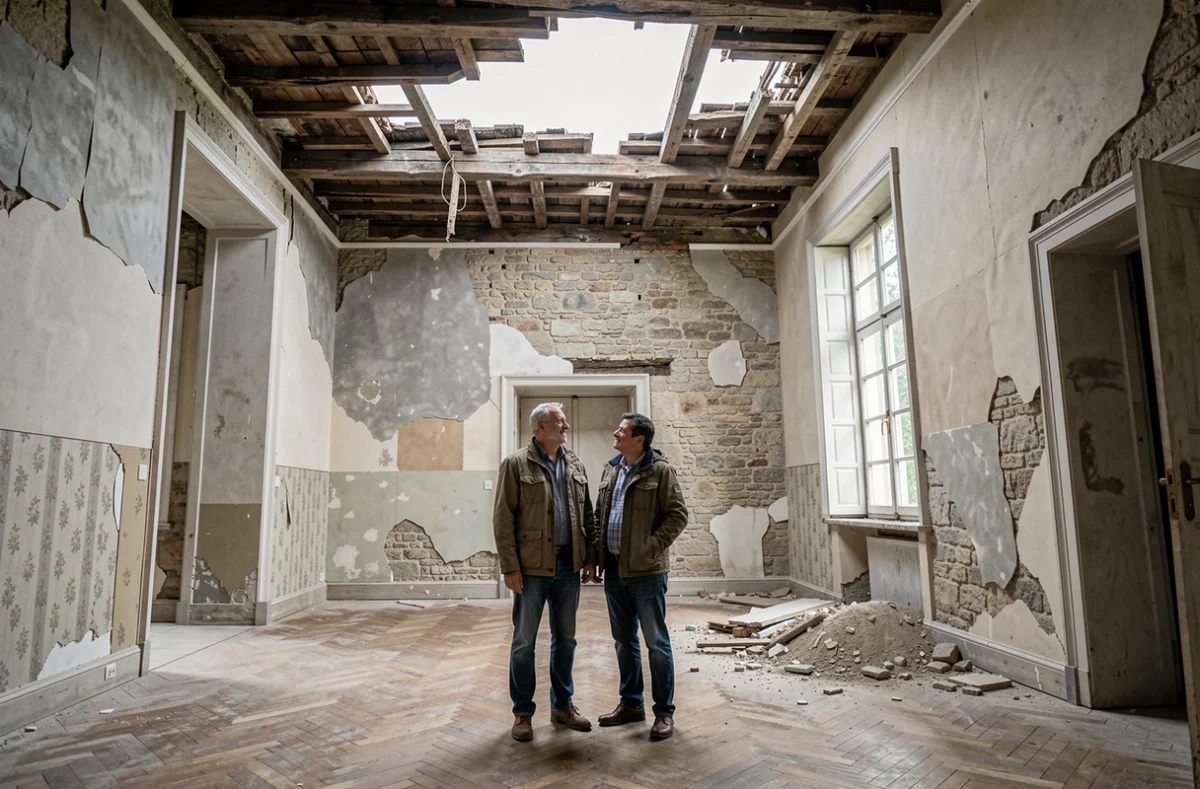
The cost of restoration work on a ruined castle consistently exceeds initial estimates. Structural surprises (foundations, framework, presence of asbestos or lead) often only become apparent after the work begins.
Public subsidies exist for classified or listed monuments, but they rarely cover all expenses. The Heritage Lottery, DRAC grants, or private sponsorship supplement funding without replacing it. The remaining cost for the owner remains the majority share of the budget.
Cadastral checks and easements: the land traps of an old castle
Beyond the building itself, the land poses specific questions. An old castle may be burdened with easements for passage, usage rights benefiting third parties, or imprecise cadastral boundaries inherited from old divisions.
The adjoining parcels (park, outbuildings, common areas) are not always included in the sale for 1 euro. Some may have been sold separately, creating enclaves or shared access. It is necessary to verify the exact perimeter of the transfer with the land publicity service.
Another point concerns the protection perimeter of the surroundings. Any classified or listed castle generates a protection zone in which neighboring constructions are subject to the opinion of the ABF. This constraint not only weighs on the castle owner but also influences the value and use of surrounding lands, which can complicate potential development or partial resale projects.
Financial and tax structuring of a protected castle
Tax relief measures related to historical monuments allow for the deduction of work and maintenance expenses from overall income, with no cap for classified properties. This tax niche attracts investors, but it requires that the owner actually incurs expenses and retains the property for a minimum duration.
The tax reduction only applies if the work is carried out in accordance with the DRAC’s prescriptions and supervised by a heritage architect. Non-compliant or unauthorized work does not entitle the owner to any tax benefits.
Complete exemption from inheritance tax may apply to classified castles, under strict conditions of public access and preservation of the property within the family heritage. This long-term heritage structuring is only suitable for buyers capable of maintaining the property over several generations.
A castle sold for 1 euro remains a monument whose real cost is measured in decades of work, charges, and administrative obligations. The only pertinent question before committing is not the purchase price, but the financial capacity to keep pace with the demands imposed by heritage protection.