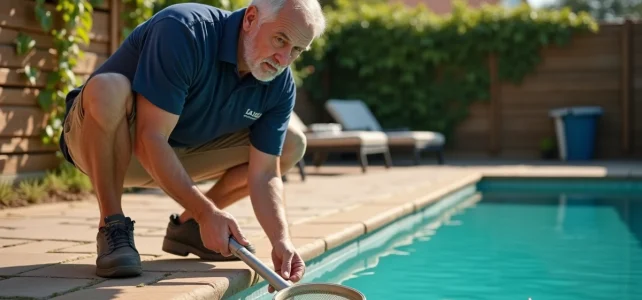
A shard of glass at the bottom of a pool remains sharp for weeks, regardless of the water temperature or chlorine levels. Unlike organic debris that degrades or dissolves, glass retains its edges and migrates to low circulation areas, where swimmers place their feet. Understanding the behavior of these fragments in water allows for the selection of the right cleaning method and helps avoid unnecessarily costly interventions.
Behavior of Glass in Pool Water
Broken glass in a pool does not behave like sand or dead leaves. The heavier shards sink immediately and settle in the tile joints, corners of the bottom, or the roughness of the liner. The micro-fragments, on the other hand, remain suspended for several hours before settling, carried by the currents created by the filtration system.
Further reading : How to Effectively Log into Your Online Email Account: Tips and Advice
A often underestimated point: perfectly clear water can contain shards invisible to the naked eye. The transparency of the water does not guarantee the absence of danger. Fragments a few millimeters in size blend in with the surface, especially on a white or light gray bottom.
Turning off the circulation pump as soon as the break is discovered limits the dispersion of shards in the hydraulic circuit. If the filtration has been running for several hours after the incident, fragments have likely reached the skimmer basket, the pump pre-filter, and the filter tank. To explore the solutions for removing glass from the pool, it is essential to first assess this dispersion in the circuit before touching the bottom of the pool.
Further reading : How to Properly Calculate Your Final Paycheck When Retiring
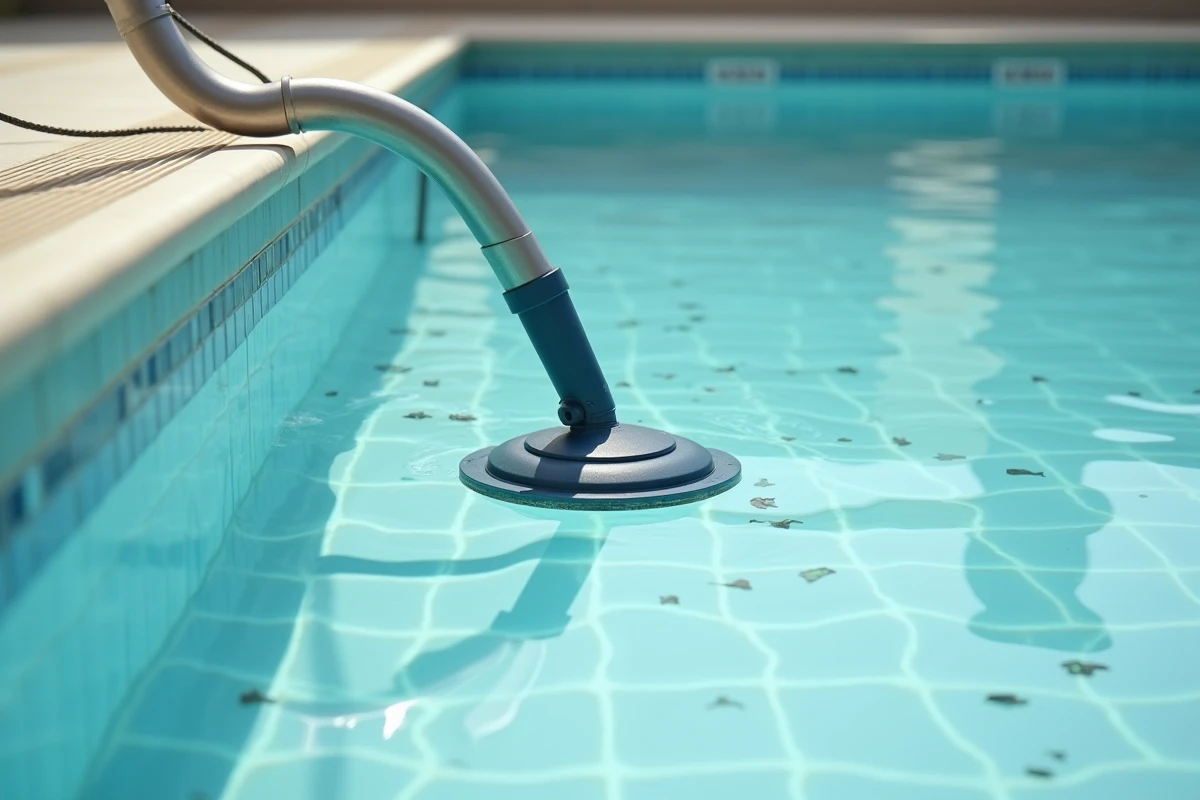
Manual Vacuuming of the Bottom: The Preferred Cleaning Method
The manual vacuum connected to the vacuum port, set to direct drain to the sewer, remains the most reliable technique. This setting sends the sucked water out of the filtration circuit, preventing shards from passing through the filter or accumulating in it.
A classic wide-head vacuum is suitable for flat surfaces. For textured bottom pools or fiberglass basins, a suction head with soft brushes avoids scratching the surface while capturing fragments trapped in the micro-reliefs.
Steps for Effective Vacuuming
- Stop the filtration and wait for the water to be perfectly still, which takes at least one to two hours, so that all fragments settle at the bottom
- Vacuum slowly in parallel strips, starting from the deep end of the pool, without sudden movements that would resuspend the particles
- Visually inspect each area with a flashlight angled sideways, as low-angle lighting makes the shards shine that remain invisible under vertical lighting
- Empty and inspect the skimmer basket, the pump pre-filter, and the bottom of the filter tank for residual fragments
After vacuuming, a complete backwash of the filter is necessary, even if you vacuumed in drain mode. Micro-shards that circulated before the pump was stopped may have remained trapped in the filter media.
Sand, Cartridge, or Diatomaceous Filter: Impact on Shard Treatment
The type of filter installed changes the procedure. A sand filter retains the larger particles but allows shards smaller than its filtration fineness to pass through. After an incident, the filtering sand may itself contain glass shards, necessitating a prolonged backwash or even a media replacement if the break was massive.
A cartridge filter is easier to clean: simply remove the cartridge, rinse it with a high-pressure jet while examining the folds, and then replace it. Diatomaceous filters, with their superior filtration fineness, capture more micro-fragments but also clog faster. A chemical cleaning of the grid after this type of incident extends the lifespan of the filtering element.
When to Consider a Partial or Total Drain
A complete drain of the pool is not always justified. It is necessary in two specific cases: when the break has occurred for several days without intervention (the shards have circulated throughout the system), or when the amount of glass is such that manual vacuuming is insufficient to ensure reliable cleaning.
For fiberglass pools, draining poses its own risk: an empty basin can deform under the pressure of the surrounding soil. In this case, a partial drain combined with several vacuuming passes in drain mode offers a better compromise between health safety and structural preservation.

Prevention of Glass Breakage Around the Pool
The majority of incidents come from standard drinking glasses, bottles, or lighting fixtures installed too close to the pool. Replacing glassware with polycarbonate or tritan cups eliminates the most common source of contamination.
- Install pool beach lighting with polycarbonate globes instead of tempered glass, as even tempered glass produces hundreds of small shards when broken
- Regularly check the portholes of underwater lights: an aging seal allows water in, causing thermal shock and can break the glass directly in the pool
- Establish a simple rule at the pool’s edge: no glass objects within two meters of the coping
Tempered laminated glass safety barriers, increasingly common around pools, present a limited residual risk. The interlayer film retains the shards in case of breakage, unlike simple tempered glass which shatters into small free pieces.
The treatment of glass debris in a pool is based on a simple principle: vacuum before the filtration disperses the shards throughout the circuit. The speed of turning off the pump after the incident determines the complexity of the subsequent intervention. Appropriate glassware at the pool’s edge remains the most effective and least costly protection against this type of accident.