A runner who stagnates at their 10 km time despite weeks of training at 60 kilometers. A rugby player who suffers sprains every season restart. These concrete situations are leading more and more athletes to seek answers from the field of sports science, where intuition and training volume are no longer sufficient.
Reliability of wearable sensors: the trap of poorly compared data
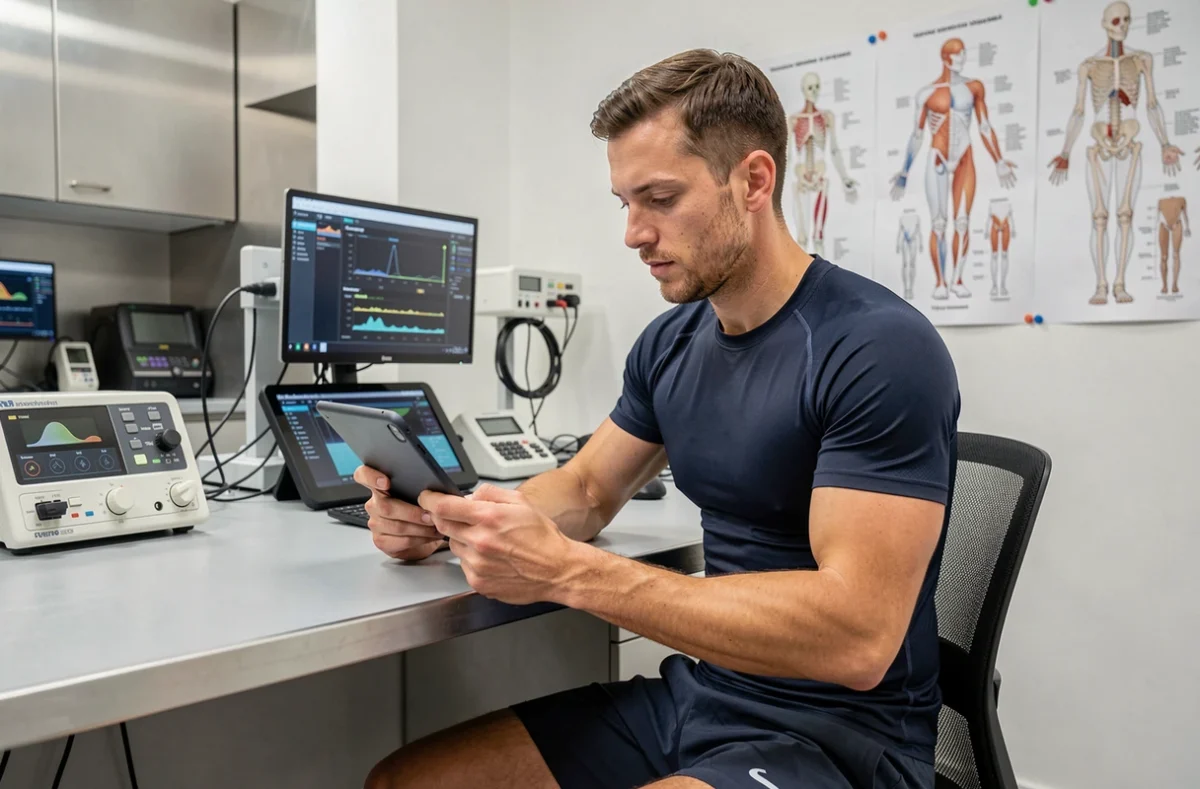
We equip ourselves with a GPS watch, a power sensor, or an accelerometer attached to the weight bar. Data accumulates, dashboards fill up. The problem arises when we want to compare this data from one session to another, or from one device to another.
A systematic review published in 2025 by Nina Claassen in Sports Medicine – Open specifically examined the reliability, agreement between devices, and validity of load-speed profiles. The conclusion is clear: two different sensors can produce divergent estimates for the same load. Changing brand or model during a training cycle skews the reading of progress.
In practice, this means it’s advantageous to keep the same device throughout a training block. Precisely documenting the measurement conditions (sensor placement, warm-up protocol, type of movement) is as important as the raw data itself. To deepen the links between scientific research and sports practice, specialized resources can be found at https://www.scienceosport.fr/ that detail these connections.
Artificial intelligence and training monitoring: current promises and limits
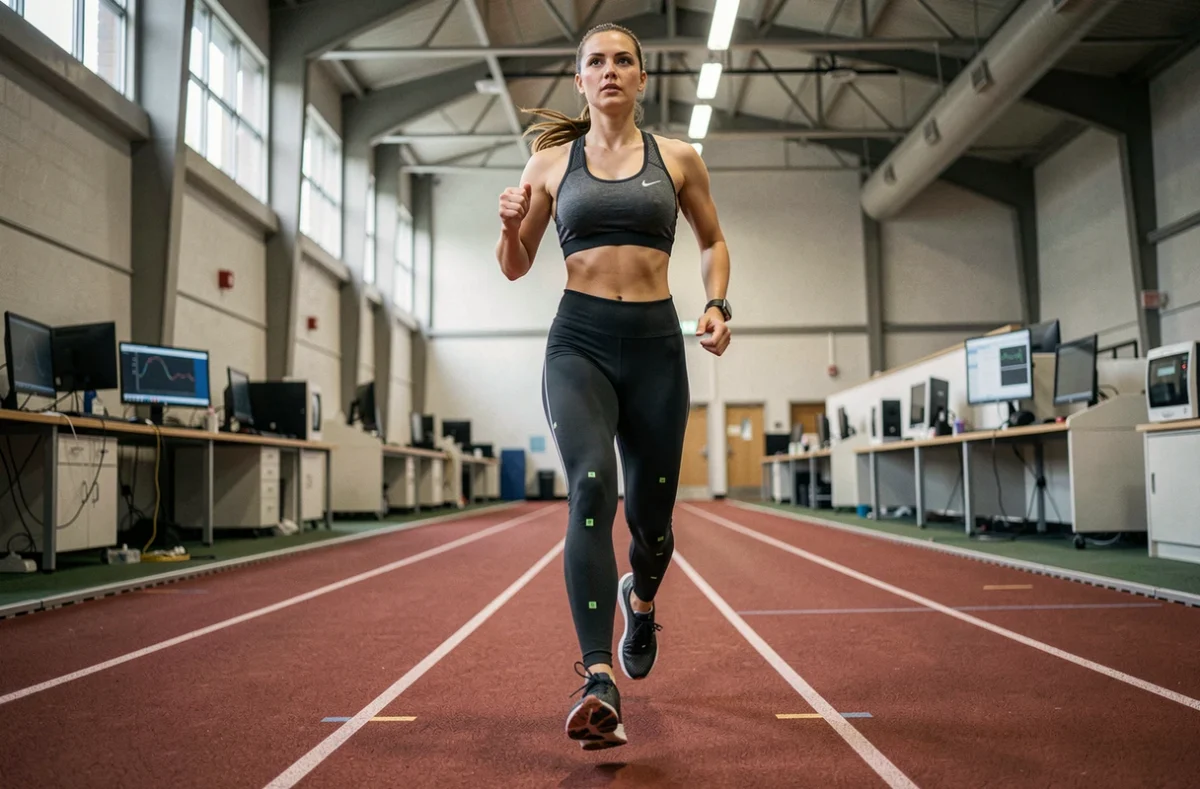
Applications offering “adaptive” training plans thanks to AI are multiplying. They analyze heart rate, rhythm variability, mechanical loads, and then adjust sessions in real time. On paper, this is appealing.
In practice, the reality is more nuanced. The clinical validation of AI applied to sports remains insufficient. The data used is heterogeneous, its interpretability raises questions, and longitudinal studies demonstrating that algorithmic recommendations actually improve sports results are still lacking.
This does not mean these tools are useless. They excel at detecting trends (progressive overload, drop in heart rate variability indicating fatigue). However, the final decision remains human: the coach or physical trainer who understands the athlete’s context (work stress, sleep quality, injury history) retains an advantage that the algorithm has not yet replicated.
What concretely changes practice
The real contribution of AI today lies in anomaly detection. An asymmetrical load spike detected over three consecutive sessions can alert the medical staff before an injury occurs. The challenge is no longer to collect data, but to link it to a training or medical decision. A dashboard displaying 40 metrics without hierarchy benefits no one.
Injury prevention: moving from reactive to predictive
Research on sports injury prevention has significantly evolved. We have shifted from a reactive treatment logic to a comprehensive approach that integrates monitoring, rehabilitation, and risk management. Structured prevention programs show tangible results when applied consistently.
A prevention program is only valuable if it is genuinely followed, which remains the weak link. Athlete adherence drops as soon as preventive exercises (eccentric work, proprioception, rotator strengthening) are perceived as wasted time. The challenge for a physical trainer is to integrate these routines into warm-ups or active recovery phases, rather than adding them as an extra burden.
- Targeted eccentric work on the hamstrings reduces the risk of muscle injury when performed at least twice a week over several months.
- Proprioceptive exercises on unstable surfaces improve joint stability, particularly for ankles and knees prone to recurrent sprains.
- Monitoring training load (acute load/chronic load ratio) helps modulate intensity during return phases after a break.
Field tests and sports evaluation: choosing the right indicators
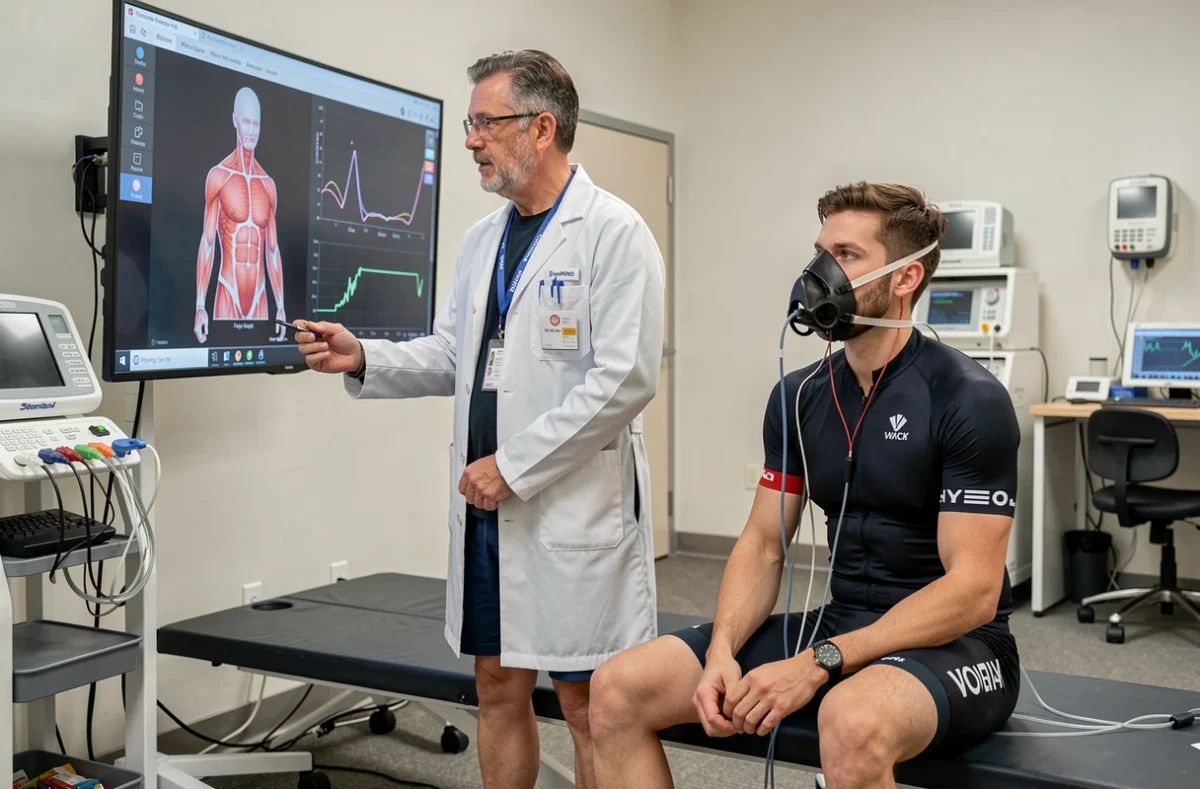
Multiplying tests does not guarantee a better evaluation. A relevant test answers a specific question: what is this athlete’s aerobic capacity compared to their last evaluation? Has their maximum strength improved on the target movement? Each test must lead to a concrete action, otherwise it only serves to fill an Excel file.
We save time by selecting two or three tests specific to the sport practiced rather than a general battery. For a middle-distance runner, a VMA test coupled with stride analysis provides immediate improvement levers. For a team sport, an agility test with direction changes and a strength-speed profile better guides physical preparation than a dozen measures disconnected from the sporting gesture.
When to repeat evaluations
Feedback varies on this point depending on the disciplines, but a rhythm of two to three evaluations per season (beginning of preparation, end of intensive block, pre-competition) offers a good compromise between monitoring and fatigue related to the tests themselves. Testing too often ends up encroaching on productive training time.
Sports science does not replace field experience or the individual knowledge of each athlete. It provides measurement tools and analytical frameworks that, when well used, transform intuitions into reasoned decisions. The most useful data remains that which actually modifies the next session.