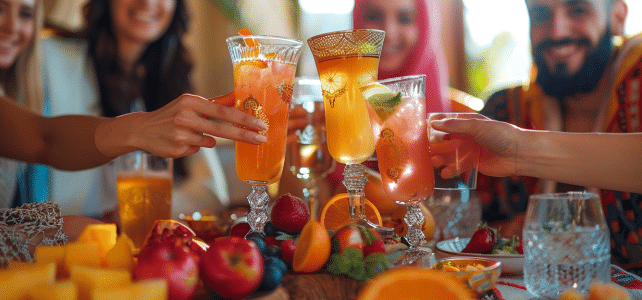
The non-alcoholic beverage market is experiencing significant growth, partly due to an increasing demand for halal products among Muslim consumers. Adhering to Islamic dietary laws is not limited to solid food; it also extends to the liquids consumed. Non-alcoholic beverages labeled halal must meet strict criteria, excluding alcohol and any ingredient of dubious origin or non-compliant with Islamic laws. This trend reflects not only religious preferences but also a healthier lifestyle choice, thus attracting a diverse clientele beyond just the Muslim community.
The criteria for halal applied to non-alcoholic beverages
The definition of a halal product revolves around its permissibility and purity for consumption according to Islamic principles. While halal products oppose haram products, which are perceived as sinful by the religion, halal certification ensures consumers of the compliance of food and beverages with these principles. For non-alcoholic beverages, the absence of alcohol is not the only criterion; the origin of the ingredients and the production methods are also scrutinized rigorously.
You may also like : Everything You Need to Know About Dogs: Breeds, Tips, and Tricks to Understand Them Well
The fermentation process, initially associated with beer, is a major consideration in determining whether a non-alcoholic beverage is halal or not. Products derived from fermentation are generally considered non-halal, which has led to the creation of non-fermented beers. The question arises for products like ‘Tourtel Twist: halal or not?’, where fermentation may be halted before alcohol production, but doubts remain about the presence of residual traces.
The doctrine of Islamic jurisprudence clearly specifies the distinction between halal and haram foods, relying on fundamental texts such as the Quran, Hadith, and Sunnah. The extension of these principles through fatwas allows for the adaptation of ancient laws to modern contexts, including for halal non-alcoholic beverages. Producers must therefore refer to these sources and their contemporary interpretations to ensure the compliance of their products.
See also : Everything You Need to Know About Adoption: Procedures, Tips, and Family Testimonials
Intoxicating substances are expressly prohibited by the Quran, and their consumption is forbidden for Muslims. This prohibition includes not only ethyl alcohol but also any substance that can alter consciousness. Therefore, non-alcoholic beverages must be free from any intoxicating properties to be considered halal, a requirement that halal certifications strive to verify and validate for Muslim consumers.

The stakes of non-alcoholic beverage consumption in the Muslim community
With an estimated growth of 20% in global trade, the halal market is a significant economic force. This expansion includes a growing variety of halal consumable products. Halal certification thus becomes a strategic issue for companies looking to establish or strengthen their presence in this booming market. The demand for certified halal non-alcoholic beverages is driven by responsible consumption that aligns with the religious principles of the Muslim community, an increasingly informed and demanding audience.
The product of non-alcoholic beer has reached the Middle Eastern market, constituting a notable consumer segment. Despite its lack of alcohol, this beverage raises skepticism within the Muslim community, questioning its halal consumption. The potential presence of alcohol traces or the mere association with a traditionally alcoholic beverage sparks a debate about the permissibility of these products in an Islamic context.
As for the product of 0% alcohol beer, its perception is tinged with the fear of intoxication, even in the absence of alcohol. The consumption of these products by young Muslims is a sensitive topic, as the halal status of these beverages is contested. Producers must therefore double their efforts to ensure not only the compliance of their products with halal standards but also to communicate clearly about their positioning to dispel doubts and strengthen consumer trust.