
In a nursery school, each team member plays a fundamental role in ensuring an optimal educational environment. The director establishes the educational vision and ensures that educational standards are met. The teachers, on the other hand, focus on the development of children’s social and cognitive skills while nurturing their natural curiosity.
The nursery assistants provide valuable support by helping manage daily activities while ensuring the safety and well-being of the children. The administrative staff manages logistical and financial aspects, allowing educators to fully dedicate themselves to their educational mission.
You may also like : The best SCPI in 2024
The main roles in the management of a nursery school
The smooth operation of a nursery school relies on precise organization and a clear distribution of roles. The nursery school organizational chart helps to understand this structure.
School Director
The school director plays a pivotal role. Responsible for implementing the school project, they coordinate educational actions and ensure the proper application of programs. They preside over the teachers’ council and the school council, where they collaborate with teachers, parent representatives, and local elected officials.
You may also like : Successful Paths and Strategies in the World of Human Resources
School Teachers
School teachers, trained to teach young children, are responsible for the education and development of students. They design and implement educational activities tailored to different developmental levels. Their mission includes promoting oral language, writing, numbers, and various learning areas.
ATSEM (Specialized Territorial Agents for Nursery Schools)
The ATSEM, employed by municipalities, assist teachers in their daily tasks. They are responsible for the hygiene of the children, the preparation of premises and materials. Their role sometimes extends to participating in educational activities and supervising children during meals.
Councils and Other Bodies
The teachers’ council, composed of the director and teachers, meets to discuss pedagogical and organizational issues. The cycle council allows for an assessment of student progress within the same educational cycle. The school council, which includes representatives of parents, municipal officials, and a departmental delegate from the National Education, decides on the internal regulations and educational projects.
Each member of the educational team, depending on their responsibilities, contributes to creating an environment conducive to the growth and learning of young children. 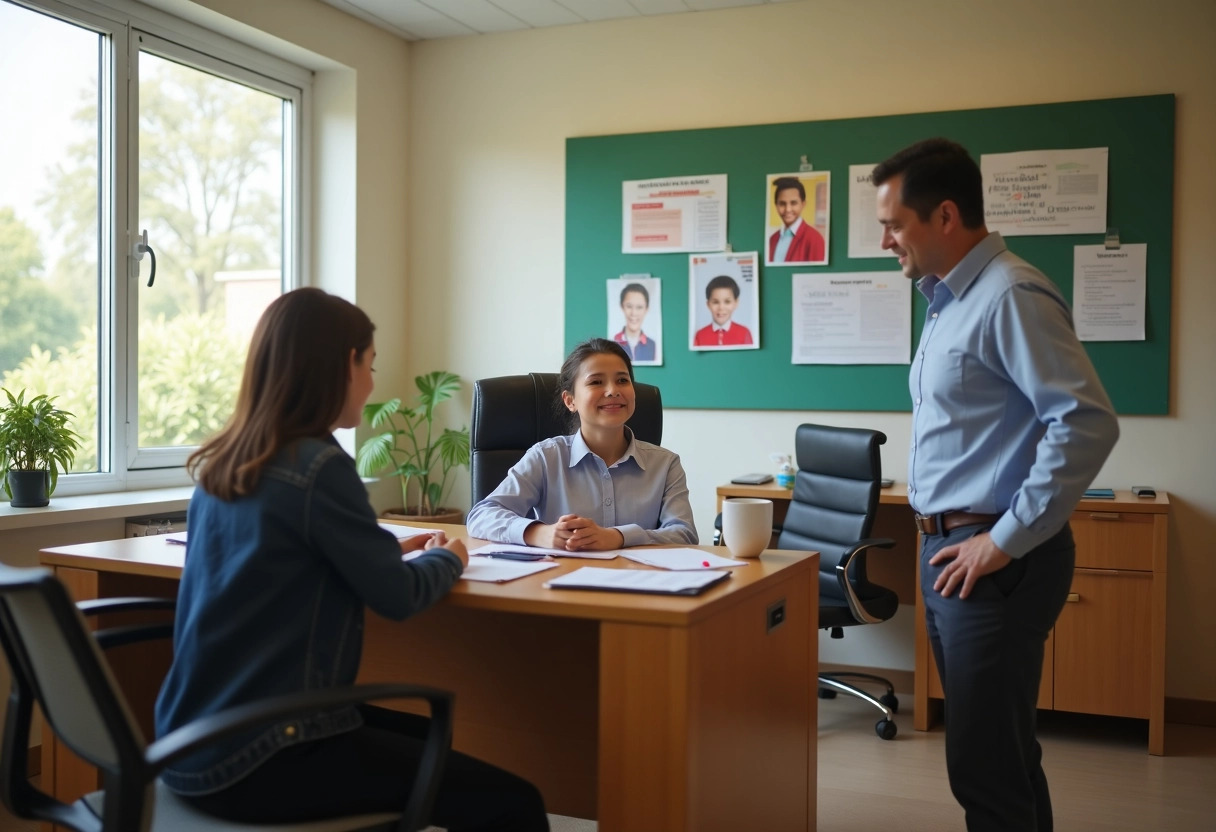
The specific responsibilities of different actors
School Director
The nursery school director bears major responsibilities. They must:
- Ensure the implementation of the school project
- Coordinate between the different educational actors
- Preside over the school and teachers’ councils
They are responsible for ensuring compliance with safety rules and the internal regulations of the institution.
School Teachers
The nursery school teachers are tasked with developing students’ skills in various areas:
- Oral and written language
- Mathematics
- Discovery of the world
They design and implement educational activities tailored to the needs and pace of each child.
ATSEM
The ATSEM, specialized territorial agents for nursery schools, play a versatile role. Provided by the municipality, they are responsible for:
- Assisting teaching staff
- Ensuring children’s hygiene
- Preparing and maintaining the cleanliness of premises and materials
They may also participate in the implementation of educational activities and supervise children in school dining areas.
Teachers’ Council and School Council
The teachers’ council, composed of the director and teachers, meets to discuss pedagogical practices and organizational issues. The school council, including representatives of parents, local elected officials, and a departmental delegate from the National Education, decides on the internal regulations and educational projects.
The collaboration between these different actors is essential to guarantee a quality educational environment conducive to the growth and learning of young children.